What Your Business Must Keep When a Technology Supplier Leaves
Keep control when a technology supplier leaves with a practical handover covering access, domains, data, configurations, suppliers, and recovery afterward.
A supplier can finish well and still leave your business exposed. The risk appears when the next person cannot access an account, trace a data flow, renew a domain, or restore a failed service. A useful handover preserves control and working knowledge, not just files.
Begin your technology handover checklist before notice is given. First, identify how the supplier’s work fits into your connected business systems, then agree what evidence must change hands. Another competent person should be able to operate, inspect, and recover the setup without relying on the departing supplier’s memory.
This guide defines the minimum pack an owner-led UAE business should retain. It covers access, domains, billing, configuration, data, automations, backups, other suppliers, changes, incidents, recovery, and open risks. It does not assume a dispute. A calm, structured exit protects both sides.
TL;DR
- In 2026, the Internet Corporation for Assigned Names and Numbers (ICANN) stated in FAQs for Registrants: Transferring Your Domain Name that certain domain transfer locks can last 60 days. Check registrant control, renewal contacts, and transfer status before notice (ICANN, 2026).
- Keep business-controlled access, a secure credential vault, recovery evidence, configuration context, and named decision owners.
- Test access before revoking supplier accounts.
- Give unresolved risks an owner and review date.
What should a technology handover checklist accomplish?
A handover should remove avoidable supplier dependence while preserving enough knowledge to operate and recover each system. Third parties were involved in 30% of breaches in Verizon’s 2025 Data Breach Investigations Report, roughly twice the previous year’s share (Verizon, 2025).
A clean exit separates custody from ownership. A supplier may administer an account without owning it. Your business should remain the registrant, subscriber, billing customer, and ultimate administrator wherever the service permits. The business systems ownership model explains how to assign decision, custody, and supplier duties without confusing them.
The Minimum Viable Handover Pack
In 2010, NIST’s Contingency Planning Guide for Federal Information Systems set out seven steps covering policy, impact analysis, preventive controls, recovery strategies, a written plan, testing, and maintenance (NIST, 2010). A smaller business can preserve those functions without building a full technical archive.
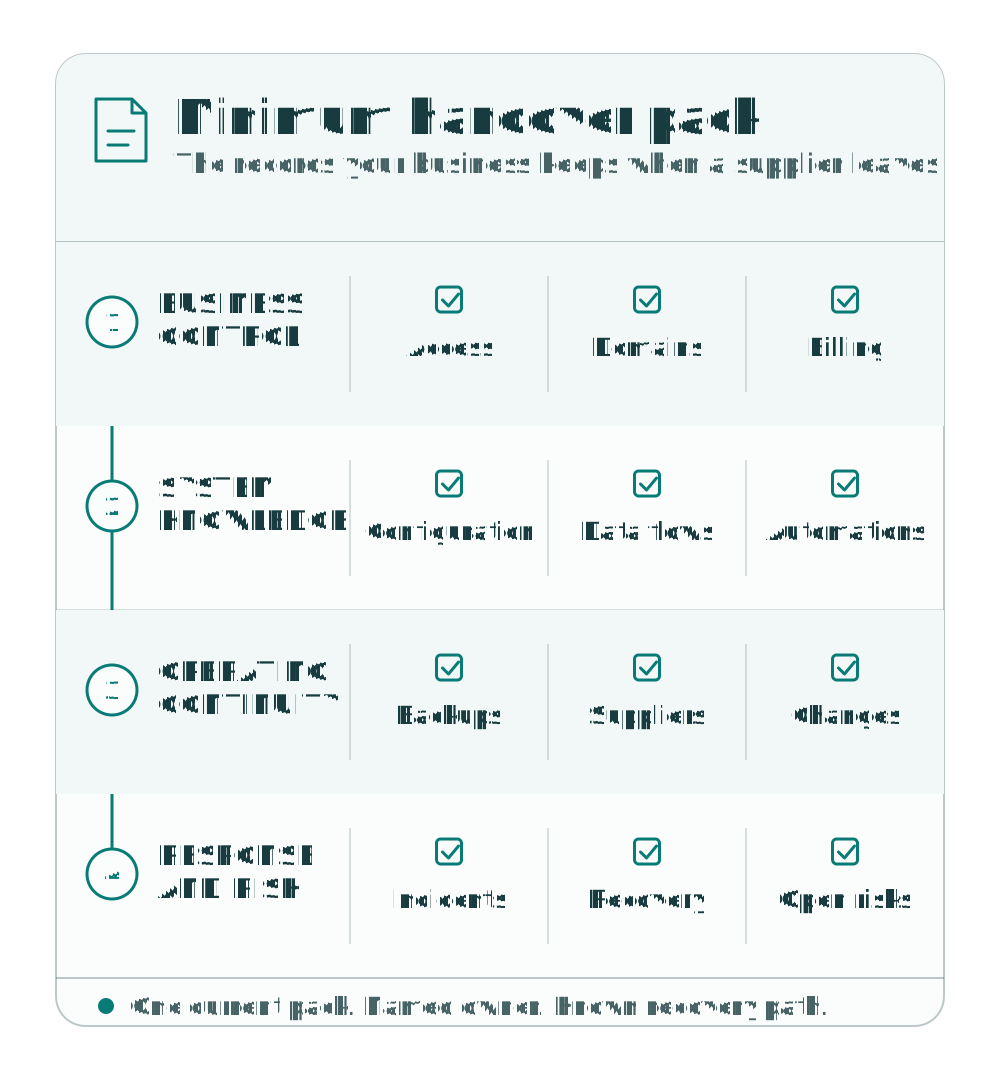
Use one controlled index that points to the real records. Do not paste live passwords, recovery codes, or secret keys into the document. Store secrets in a business-controlled password manager, then record the vault location and accountable owner.
Identity and access
List every administrator account, role, sign-in method, recovery contact, service account, API credential, and multifactor authentication method. Record which identities belong to the business and which belong to the supplier. The software access and credentials handover is complete only after a business administrator can add, change, and remove access independently.
Domains and billing
Record the domain registrant, registrar, renewal date, nameservers, DNS host, transfer status, and recovery email. Add hosting, software subscriptions, cloud services, payment methods, invoices, renewal terms, usage limits, and cancellation rules. Business-controlled billing matters because an expired card can stop a service even when the technical setup remains intact.
Source and configuration
Collect source repositories, design files, deployment instructions, environment names, version requirements, configuration exports, integration settings, and build or release steps. Record where secrets belong without exposing them. Include the reason behind unusual settings. A future supplier needs to distinguish a deliberate constraint from an old mistake.
Data flows and automations
Map where information enters, which system becomes authoritative, what fields move, which automation triggers the movement, and where failures appear. Note schedules, filters, transformations, notifications, retry behaviour, and manual recovery. If future connections are planned, keep the sequence in the business systems integration plan rather than burying it in exit notes.
Backups and recovery
State what is backed up, how often, where copies sit, how long they remain, who can reach them, and how restoration works. Include the last successful restore test and any exceptions. A system runbook for a small business should name the first checks, recovery order, decision owner, technical contact, and fallback process.
Suppliers, history, and open risks
List other suppliers, support channels, account references, contract dates, and dependencies. Add a concise change history, previous incidents, recurring faults, temporary workarounds, pending renewals, and known weaknesses. Every open risk needs an owner, consequence, next step, and review date. Unresolved does not mean undocumented.
This pack is deliberately smaller than a full technical archive. Its job is continuity. The founder systems cleanup and handoff shows why useful documentation follows the actual workflow instead of becoming a disconnected file collection.
How do you transfer access, domains, and billing safely?
In 2026, ICANN’s FAQs for Registrants: Transferring Your Domain Name stated that certain registrant changes can trigger a 60-day transfer lock and that registrars must provide an Auth-Code within five calendar days of a request (ICANN, 2026). Check domain control early because a last-day contact change can delay portability.
Start with a business administrator account that uses a business-owned email address and recovery method. Confirm that it can view billing, manage users, export data, change configuration, and contact support. Supplier accounts should then move to named, limited roles. Shared administrator logins hide who changed what and make removal harder.
In our experience, the most useful control is a two-person check. One person performs the transfer, while another business representative confirms access from a separate device. That simple check catches supplier-only recovery emails, missing billing rights, and multifactor methods tied to a departing phone.
How do you prove that data, automations, and backups can be recovered?
In 2010, NIST’s Contingency Planning Guide for Federal Information Systems divided recovery into three phases: activation and notification, recovery, and reconstitution (NIST, 2010). Test all three before the supplier’s knowledge disappears.
Choose one representative workflow, such as an enquiry becoming a booking and invoice. Follow it from entry through every system. Confirm field meanings, triggers, delays, failure alerts, and manual recovery. This illustrative test is not a measured client result. Its purpose is to expose missing knowledge before access disappears.
Then restore a safe sample from backup. Record who requested it, which copy was used, how long the process took, what validation occurred, and what could not be restored. Do not overwrite live data for convenience. Use an isolated environment or a supplier-approved recovery method.
Finally, test reconstitution. Confirm that staff can resume the workflow, scheduled jobs restart correctly, integrations reconnect, and monitoring can detect another failure. If the business cannot validate the restored service, the handover still depends on the supplier who designed it.
A backup file becomes durable only when it sits inside a repeatable recovery path. That path needs known authority, inputs, sequence, and acceptance checks. This distinction belongs in every business systems documentation checklist because stored data without operational context can remain unusable.
Final checks before removing supplier access
Keep the supplier’s final access until the business can perform and witness the acceptance checks. In 2010, NIST’s Contingency Planning Guide for Federal Information Systems included testing and maintenance among its seven contingency-planning steps (NIST, 2010). Name who will receive notices, apply updates, review failures, and approve urgent changes after the supplier leaves.
Run a witnessed acceptance session. The business representative should open the handover index, reach each critical account, find current invoices, locate source and configuration, trace one data flow, and explain the recovery sequence. The departing supplier can correct gaps while context is still available.
Close the exit with a dated record. The record should name what was received, what was tested, what remains open, and who accepted each exception. Rotate or revoke supplier credentials only after business access is proven. Preserve audit history where possible instead of deleting identities that appear in past records.
A retained technology relationship may hold this context between changes, but the exit standard should remain the same. The business must still control its assets and understand what another competent party would need. The purpose is portability. It does not justify keeping a particular supplier.
Frequently asked questions
The recurring handover questions concern timing, credentials, source material, and unresolved issues. In 2026, ICANN’s FAQs for Registrants: Transferring Your Domain Name allowed certain domain-transfer denials within 60 days of initial registration or a previous transfer (ICANN, 2026). That constraint alone makes a last-day review too late for some exits.
When should the handover begin?
Begin before contractual notice if possible. In 2026, ICANN says a registrar may deny transfer within 60 days of initial registration or a previous transfer in FAQs for Registrants: Transferring Your Domain Name (ICANN, 2026). Early review gives you time to find similar timing constraints elsewhere.
Should the document contain passwords and recovery codes?
No. NIST’s 2025 digital identity guidance requires verifiers to allow password managers and autofill (NIST, 2025). Keep passwords and recovery codes in a controlled business vault. The handover index should record the vault location, accountable owner, approved access, and rotation procedure, not the secrets themselves.
Is a repository export enough for custom software?
No. In 2010, NIST described seven progressive contingency-planning steps in Contingency Planning Guide for Federal Information Systems (NIST, 2010). Source code is one input. A replacement also needs configuration, dependencies, deployment steps, data structures, decisions, recovery instructions, and access to the services around it.
What if the supplier cannot resolve every open issue?
Record each issue rather than delaying the whole exit. Name its business effect, supporting evidence, temporary control, accountable owner, next step, and review date. This record lets the incoming team distinguish accepted risk from forgotten work. It also preserves an honest baseline when the departing supplier cannot complete a repair.
What should the business keep after the exit?
After the exit, keep control, evidence, decision context, and a tested route back to operation. In 2026, ICANN’s FAQs for Registrants: Transferring Your Domain Name required registrars to provide a domain Auth-Code within five calendar days of a request (ICANN, 2026). Retained records help the business use such portability rights without depending on the former supplier.
A careful handover also changes how you view the cost of outside technology work. Supplier price belongs in that wider cost discussion. This checklist asks whether the business retained usable knowledge and control.
Return to the wider guide on why business systems become disconnected to place the handover pack within the full workflow. The supplier’s working knowledge should transfer cleanly. Your records, access, and ability to recover should stay.
Sources
- Verizon, 2025 Data Breach Investigations Report, retrieved 2026-07-16.
- National Institute of Standards and Technology, Contingency Planning Guide for Federal Information Systems, Special Publication 800-34 Revision 1, retrieved 2026-07-16.
- Internet Corporation for Assigned Names and Numbers, FAQs for Registrants: Transferring Your Domain Name, retrieved 2026-07-16.
- National Institute of Standards and Technology, Digital Identity Guidelines: Authentication and Authenticator Management, Special Publication 800-63B, retrieved 2026-07-16.